
When Bipolar Disorder Is Misread: A Call for Better Understanding and Support
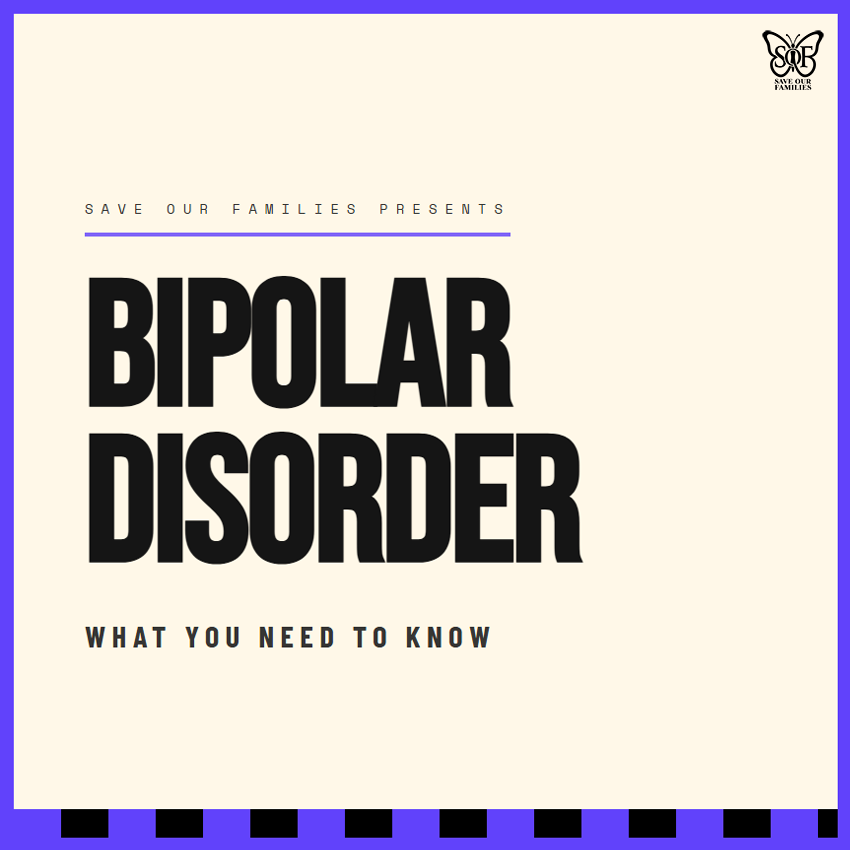
A National Bipolar Day Editorial
On any given day, someone is being labeled difficult, unpredictable, or unstable.
A student was removed from class.
An employee was written up for inconsistency.
An individual in a courtroom is struggling to answer questions in a way that aligns with institutional expectations.
What often goes unexamined in these moments is a more critical question:
What if what we are witnessing is not defiance, but a misunderstood mental health condition?
National Bipolar Day offers an opportunity to confront that question directly. Yet, too often, public discourse surrounding bipolar disorder remains oversimplified, reducing a complex mental illness to stereotypes about mood and behavior. This reduction not only distorts understanding but also shapes how individuals are treated across systems that influence their daily lives.
Beyond the Stereotype
Bipolar disorder is a mental illness characterized by significant shifts in mood, energy, and activity levels, typically involving periods of mania or hypomania and depression (National Institute of Mental Health [NIMH],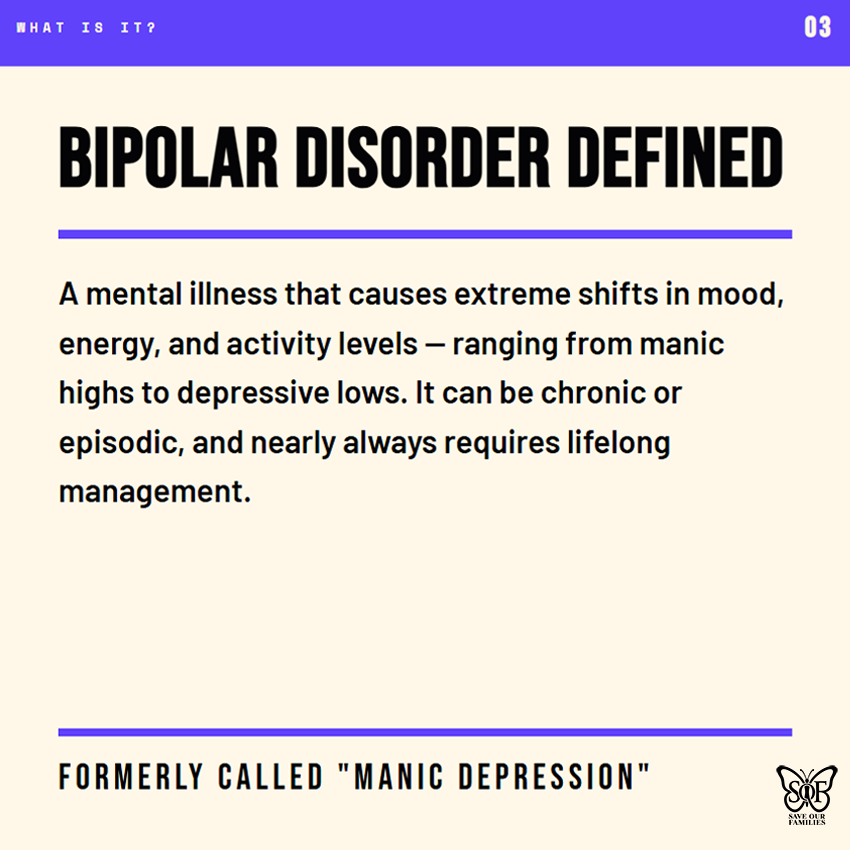
2022). These fluctuations are not merely emotional variability; they can profoundly affect an individual’s ability to maintain routines, relationships, and stability in everyday life.
Despite this, public perception continues to frame bipolar disorder through a behavioral lens, often interpreting symptoms as personal choices rather than manifestations of a brain disorder. This misunderstanding contributes to stigma and delays in diagnosis, particularly when symptoms are misattributed to personality or character.
What Symptoms Represent
During manic or hypomanic episodes, individuals may experience elevated energy, decreased need for sleep, rapid speech, and increased engagement in high-risk activities. Conversely, depressive episodes may involve low energy, hopelessness, disrupted sleep patterns, and thoughts of death or suicide (Substance Abuse and Mental Health Services Administration [SAMHSA], 2009).
These shifts reflect underlying differences in brain and mood regulation, not individual shortcomings. However, because symptoms often present as observable behaviors, they are frequently judged without consideration of their underlying causes. As a result, individuals may be disciplined, dismissed, or misunderstood in educational, professional, and legal settings.
When Misunderstanding Becomes Harm
The consequences of this misinterpretation extend beyond individual interactions and into broader systems.
In Cleveland, the cost of misunderstanding bipolar disorder shows up in plain sight. A student is disciplined for behavior that is really a symptom. A worker is labeled unreliable instead of supported. A person in crisis moves through emergency care or community systems without the continuity needed for stability. In a city where mental health challenges often overlap with poverty, housing instability, and substance use, bipolar disorder is not just a diagnosis to be managed; it is a test of whether our systems are built to respond with humanity.
In educational settings, students exhibiting symptoms may be labeled disruptive rather than supported. In workplaces, employees may be penalized for inconsistency rather than accommodated. Within the legal system, individuals may be expected to demonstrate comprehension and responsiveness without acknowledgment of how mental health conditions affect cognition and communication.
These challenges are further compounded in communities experiencing systemic inequities, where access to mental health care is limited, and stigma is heightened. Bipolar disorder can co-occur with trauma and substance use, which may increase risk and complicate symptom presentation (SAMHSA, 2009). Without a comprehensive approach, individuals are left navigating multiple layers of vulnerability without adequate support.
Treatment, Trust, and Continuity of Care
Bipolar disorder is a lifelong condition, but it is treatable. Evidence-based approaches include medications, psychotherapy, and structured lifestyle practices that support stability (NIMH, 2022).
However, treatment adherence is not simply a matter of compliance. During manic episodes, individuals may perceive themselves as functioning well and discontinue medication, a phenomenon directly associated with the condition itself (SAMHSA, 2009). This underscores the importance of developing care systems that prioritize trust, education, and long-term engagement rather than punitive responses to inconsistency.
The effectiveness of treatment is closely tied to whether individuals feel safe, respected, and understood within the systems providing care.
Reframing Through Community Care
A community care framework offers a more responsive approach to supporting individuals living with bipolar disorder.
Rather than emphasizing perfection or immediate stability, community care prioritizes safety, dignity, and ongoing connection.
This approach recognizes that:
Progress is not linear.
Engagement may fluctuate.
Support must remain accessible regardless of setbacks.
By meeting individuals where they are, this shifts the focus from control to collaboration, creating pathways for sustained care and improved outcomes.
A Call to Action
National Bipolar Day should not be limited to awareness. It must serve as a catalyst for change across multiple levels.
At the individual level, this requires challenging assumptions and engaging with mental health through an informed and empathetic lens.
At the institutional level, it requires:
-
Expanding access to mental health services.
-
Integrating trauma-informed and culturally responsive care.
-
Reducing punitive responses to mental health symptoms.
-
Promoting education that accurately reflects the complexity of conditions like bipolar disorder.
At the community level, it requires creating environments where individuals feel safe to seek support without fear of judgment or exclusion.
In Closing
Bipolar disorder is not defined by stereotypes, nor should it be understood through fragmented narratives that prioritize behavior over biology.
It is a complex, treatable condition that requires informed, compassionate, and sustained responses.
As we recognize National Bipolar Day, the responsibility extends beyond acknowledgment. It calls for a collective commitment to shifting how we understand, respond to, and support individuals living with bipolar disorder.
Because when understanding improves, outcomes follow.
References
about author

Created by the team at Save Our Families.
subscribe to our newsletter
Join the Save Our Families newsletter for updates on community care, mental health tools, healing stories, and events you won’t want to miss.
Note: We promise not to flood your inbox—just healing vibes, resources, and real talk.
Recent Posts
When Bipolar Disorder Is Misread: A Call for Better Understanding and Support
A National Bipolar Day Editorial On any given day, someone is being labeled difficult, unpredictable, or unstable. A student was removed from class.An employee was written up for inconsistency.An individual in a courtroom is struggling

Save Our Families Launches Community Care & Leadership Series to Strengthen Prevention Through Skill-Based Education
Cleveland, Ohio – Save Our Families announces the launch of its Spring 2026 Community Care & Leadership Series, a four-week virtual educational program designed to equip community members with practical tools for intervention, dialogue, sustainability,

Save Our Families Invites Cleveland Residents to a Crochet Workshop
CLEVELAND, OHIO — December 8, 2025 —Save Our Families, in partnership with A2:21:4C, is proud to announce a free community-centered crochet workshop taking place on Wednesday, January 14, 2026, from 6 to 8 PM. The